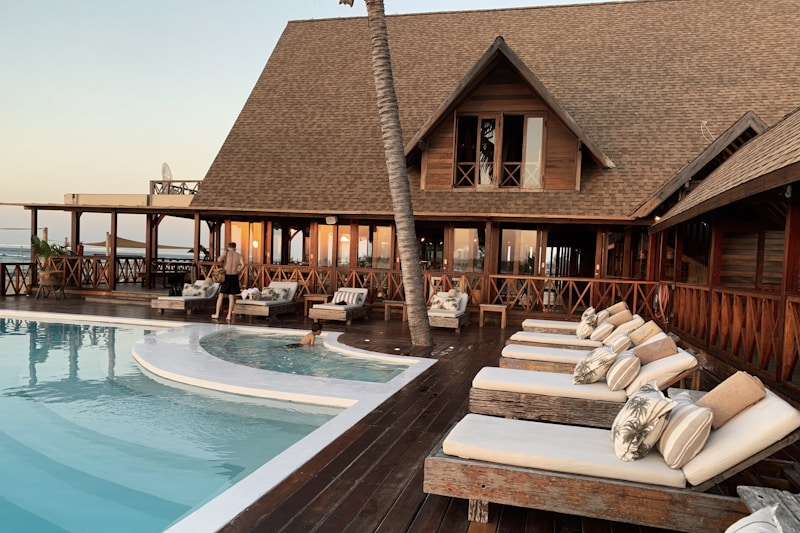
Filming high-refraction luxury subjects—whether a 3-millimeter diamond bezel or a 40,000-square-foot waterfront resort—comes down to controlling specular contrast ratios rather than flooding the scene with flat light. For fine diamond jewelry in solid 14k gold, cinema crews pair continuous 5600K high-SSI diffusion cones and black-velvet negative fill with pinpoint hard micro-Fresnel kickers so metal prongs stay liquid and dimensional while diamond facets disperse prismatic fire without digital sensor clipping. At architectural scale, the exact same contrast physics govern golden-hour and blue-hour resort cinematography.
Luxury commercials live or die in the highlights. Put an untrained camera crew in front of a fine diamond bracelet or a glass-walled lakeside resort lobby at sunset, and you get the exact same failure mode: clipped white sensor channels, muddy metallic reflections, and zero sense of tactile craftsmanship. Across more than a decade shooting high-end hospitality, bridal couture, luxury real estate, and macro product campaigns at Martich Productions, we rely on disciplined optical engineering to make precious materials and architectural spaces glow on screen.
1. The Optical Paradox of Filming Precious Metals Alongside Diamonds
Every luxury product cinematographer eventually confronts a fundamental physics contradiction: highly polished gold and faceted diamonds want opposite lighting environments. Solid 14k yellow or white gold acts like a curved mirror—point a bare hard LED at a gold setting and you get an ugly white hotspot surrounded by dead black reflections of your studio ceiling and camera tripod. Gold wants ultra-smooth, uninterrupted gradient diffusion ("tenting") interrupted only by crisp strips of black negative fill to carve three-dimensional edges along prongs and gallery rails.
Diamonds, however, behave according to total internal reflection and chromatic dispersion (a refractive index of 2.417 and dispersion value of 0.044). Wrap a diamond solely inside a soft white light tent and the stone goes milky and lifeless—all brilliance, zero fire. To ignite rainbow scintillation as the piece moves,facets need discrete, pinpoint hard light sources striking at 30° to 45° off-axis.
You can see why this dual-layer rig matters so much when filming articulated pieces like certified lab-grown diamond tennis bracelets, where dozens of individually set stones flex continuously along the wrist or turntable. Certified D–F colorless, VS+ clarity lab-grown diamonds share the exact crystal lattice, thermal conductivity, and optical dispersion of mined stones, while solid 14k gold links require creamy specular roll-off right beside each stone’s crown facets. When shooting campaigns for modern fine jewelry houses like Viviour, we build a hybrid rig: an overhead 4x4 bleached muslin book light + matte white acrylic sweep establishes liquid metallic gradients across the 14k gold, while two Dedolight or Aputure Spotlight Mini projection tubes cut razor-thin 5600K beams onto the stones alone—producing natural spectral fire in camera without fake star-glow plugins.
2. Macro Cinema Lenses, Probe Optics & Cross-Polarization Control
At 1:1 or 2:1 macro magnification on a full-frame cinema sensor, depth of field collapses to fractions of a millimeter even at T8 or T11. Choosing the right optical toolset determines whether luxury product footage feels monumental or clinical:
- 100mm T2.9 Macro Cinema Primes & Tilt-Shift Optics: Unlike photo lenses that suffer focus breathing (changing magnification as focus racks from clasp to centerpiece), true cinema macro lenses maintain locked framing during precision follow-focus pulls—and Scheimpflug tilt adapters let us align the plane of sharp focus diagonally along an entire necklace or watch dial at T5.6 without diffraction softness.
- 24mm T14 Wide-Angle Periprobe Lenses: Tubular waterproof probe optics glide millimeters above champagne coupes, infinity-pool waterlines, mechanical watch movements, and diamond pavé settings—giving tiny luxury objects towering architectural perspective.
- Selective Linear + Circular Cross-Polarization: Placing linear polarizing film over key/fill modifiers and rotating a cinema-grade circular polarizer (CPL) in the matte box lets our DP dial specular surface glare on gemstones, sapphire watch crystals, marble countertops, and resort water features with mathematical precision—stopping just short of total extinction so materials never look plasticky.
- Black Velvet Negative Fill Flags: Small matte Cinefoil and flock-velvet cards positioned inches outside the frame inject crisp dark contours into polished metal edges, doubling perceived contrast without crushing shadow detail.
“In luxury cinematography, what you subtract from the light is more important than what you add. Negative fill is what separates a $500 tabletop clip from a Fifth Avenue campaign.”
3. Scaling the Exact Same Physics to Luxury Resorts & Architectural Spaces
Step back from a 100mm macro tabletop rig to a 60-acre Hill Country wine resort, lakeside estate, or boutique hotel in our luxury hotel and resort cinematography division, and the governing visual rules remain remarkably identical: protect specular highlights, motivate warm vs. cool color-temperature separation, and shape negative space.
Amateur architectural video shoots midday when overhead Texas sun blasts pool decks to chalky white and turns shaded cabanas into pitch-black caves. On commercial hospitality productions showcased throughout our video production portfolio, we schedule capture around solar geometry and three signature lighting techniques:
1. The 18-Minute Blue-Hour Equilibrium: Roughly 12 to 30 minutes after sunset, ambient twilight sky luminance drops to match interior 2700K–3000K architectural sconces, chandeliers, and firepits within a single cinema stop. Shooting wide gimbal and Inspire/Mavic Cine ProRes passes during this window produces rich cobalt skies balanced against glowing warm glass facades—zero HDR haloing required.
2. Window-Motivated High-Output Daylight HMI/COB Keying: For daytime spa, culinary, and presidential-suite lifestyle scenes, we station 1200W daylight fixtures outside patio glass pushing through 1/2 Grid Cloth to recreate consistent "golden afternoon sunlight" for four straight hours regardless of passing clouds, balanced with subtle warm practicals inside.
3. Culinary & Amenity Micro-Vignettes: Luxury travelers book resorts for sensory moments—condensation rolling down a craft cocktail glass, steam rising off plated wagyu, linen texture catching morning light. Intercutting sweeping 24mm architectural gimbal moves with 85mm and 100mm macro sensory inserts creates hypnotic pacing that drives direct suite bookings.
4. Color Science: Protecting Skin Tones, Gold Warmth & Architectural Whites
Mixed color temperatures ruin luxury brand perception faster than almost any other post-production error. If a white diamond picks up a green LED spike, it suddenly reads as low-grade; if bridal silk or resort marble skews magenta, the space feels synthetic. Across all commercial packages listed on our creative services and transparent pricing pages, we anchor color accuracy at both ends of the pipeline.
On set, every fixture we deploy meets CRI 97+ / TLCI 98+ / high SSI daylight or tungsten standards, calibrated with a spectrometer and X-Rite ColorChecker Video chart at the top of each setup. In post-production, grading inside an ACEScct or DaVinci Wide Gamut color-managed pipeline lets our colorist isolate 14k gold hue vectors, hold neutral D–F diamond whites in the upper waveform IRE 85–92 zone, and render luminous, natural human skin tones across HDR mobile displays and Rec.709 web masters alike.
5. Planning Your Next Luxury Product, Hospitality or Architectural Shoot
Whether you are launching an heirloom fine jewelry collection, repositioning a five-star Texas Hill Country resort, or marketing an architectural estate, visual authority is built millimeter by millimeter in the light. Contact Martich Productions to discuss pre-production lookbooks, macro + aerial cinema packages, and custom commercial scheduling with our directing team.
Austin • Marble Falls • Nationwide Commercial Travel
Ready to Scope Your Next Commercial Film?
Compare packages on our transparent rate card or talk directly with Mark & Krystal Martich about custom campaign production.